Restaurants
The Shack Coffee Shop
Seating capacity: 20
Facilities: Outside seating |
Open: All year
The Shack Coffee Shop for best home bakes and coffee
Contact: Lucas - 076 790 2606
Facebook
Facilities: Outside seating |
Open: All year
The Shack Coffee Shop for best home bakes and coffee
Contact: Lucas - 076 790 2606
Sams Restaurant
Seating capacity: 20
Open: All year
Breakfast untill 11am
Fish and Chips
Contact: Sam - 071 797 9435
Open: All year
Breakfast untill 11am
Fish and Chips
Contact: Sam - 071 797 9435
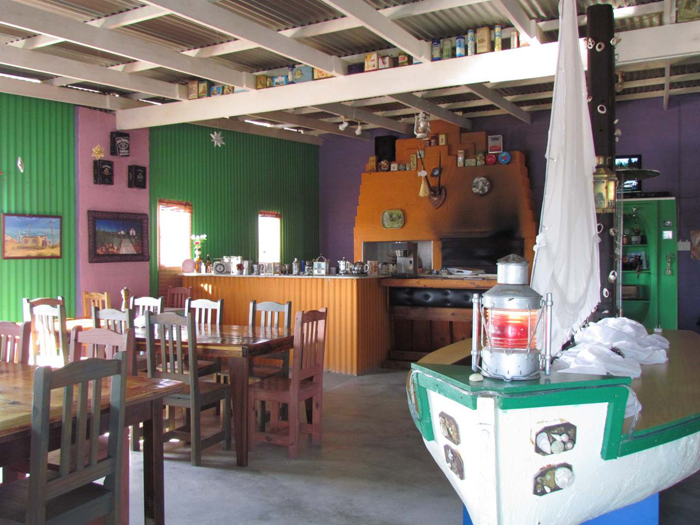
Die Rooi Spinnekop Restaurant
Seating capacity: 50
Open: All year
Bookings essential!
Fully licensed restaurant, renowned for its' mouthwatering West Coast cuisine. The charming atmosphere, great food, good wines and warm West Coast hospitality, makes for an incredible dining experience.
Contact: Annamarie
M: +27 (0) 76 430 8300
P: +27 (0) 27 692 3966
Facebook
Open: All year
Bookings essential!
Fully licensed restaurant, renowned for its' mouthwatering West Coast cuisine. The charming atmosphere, great food, good wines and warm West Coast hospitality, makes for an incredible dining experience.
Contact: Annamarie
M: +27 (0) 76 430 8300
P: +27 (0) 27 692 3966
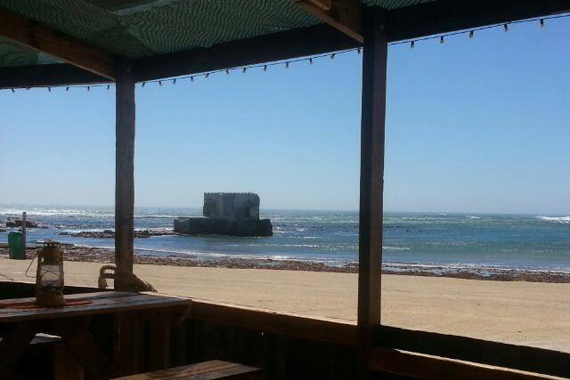
Dop en Kreef
Seating capacity: 50
Please book in advance to avoid dissapointment during the busy seasons.
OPEN SCHOOL HOLIDAYS & FLOWER SEASON. PLEASE MAKE A BOOKING TO AVOID ANY DISAPPOINTMENT.
Casual pub on the beachfront with a magnificent view of the Hondeklipbaai harbour
Contact: Lohana 027 692 3095 / 083 281 8327
Facebook
Please book in advance to avoid dissapointment during the busy seasons.
OPEN SCHOOL HOLIDAYS & FLOWER SEASON. PLEASE MAKE A BOOKING TO AVOID ANY DISAPPOINTMENT.
Casual pub on the beachfront with a magnificent view of the Hondeklipbaai harbour
Contact: Lohana 027 692 3095 / 083 281 8327